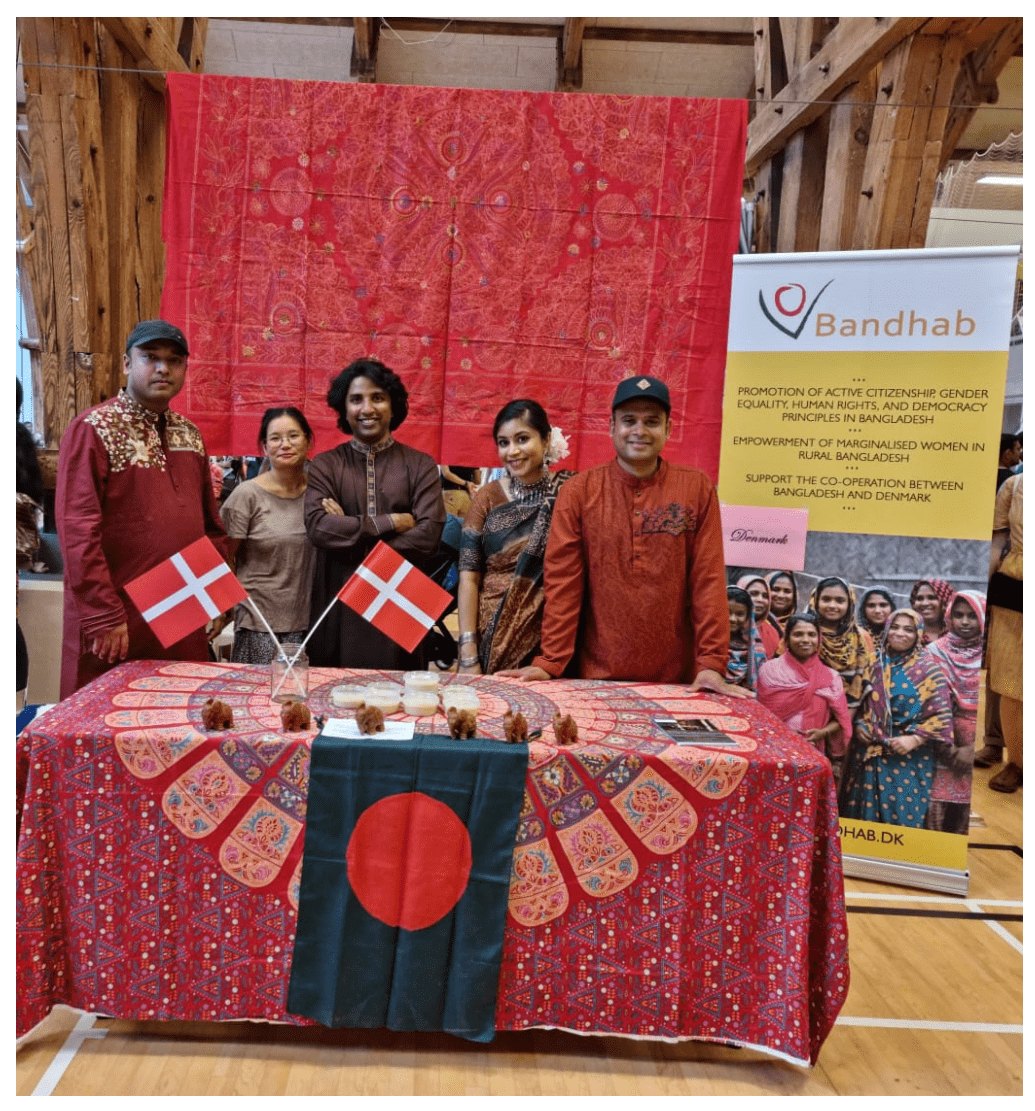
A personal story from the Bangladesh tour, by Afif Hossain.
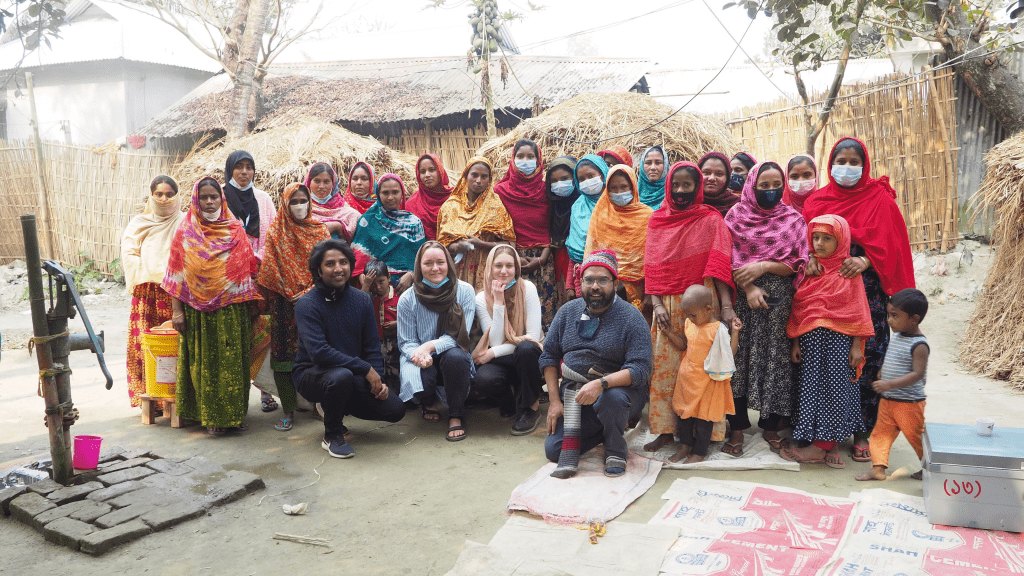
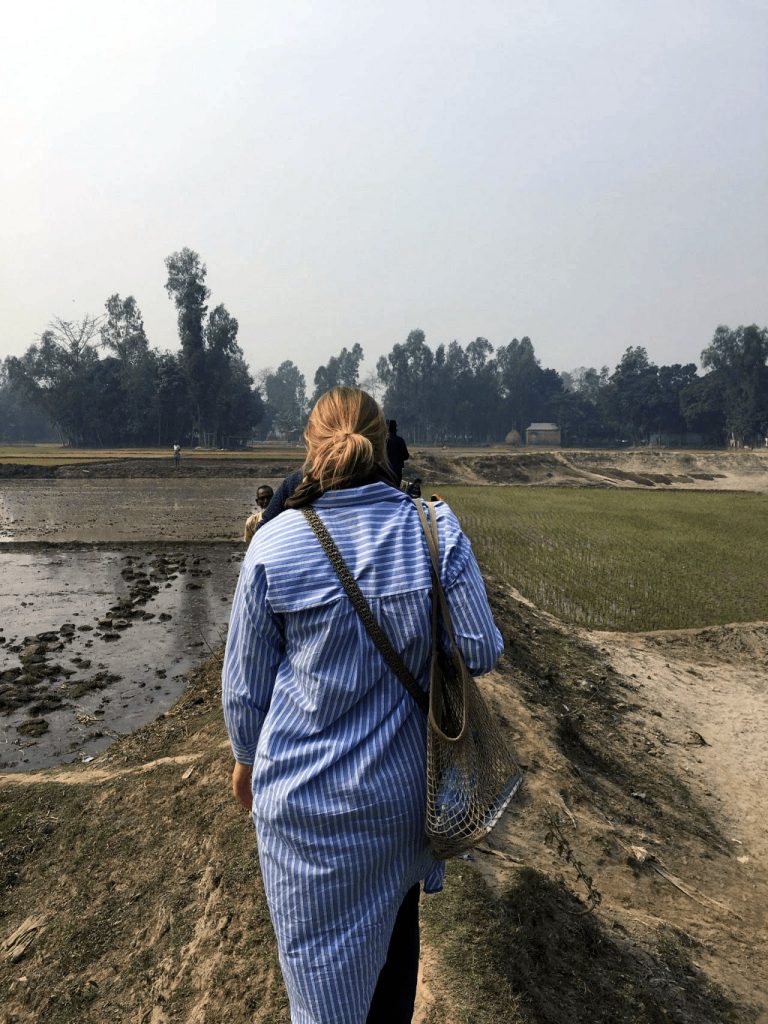
It’s a lovely sunny day. The temperature is almost like Danish summer, yet it’s just a regular winter day in Shaghata, a small and a bit isolated place in green rural Bangladesh. Today we are visiting Bonarpara station to meet a small group of women, on a local three-wheeler called an “auto”. Natalia, Katrine and me from Bandhab, and some colleagues from our partner organisation, are on our way. This is Natalia and Katrine’s first visit to Bangladesh. They barely know the country or where we are going, but they seem very excited. I have visited Bonarpara before. It is a small and quiet railway station. We will meet a group of women who live just beside it.
Four years back, in 2018, I was sent from Bandhab in Denmark for a field visit, also to search for a new area and target group to work with. In that quest, on a similar foggy winter morning, I reached this station. I was told there was a Dalit community here, low-caste Hindus also known as the “untouchables”. The word Dalit literally means “deprived”. Dalits were brought from different parts of the subcontinent and assigned manual cleaning jobs in British-ruled India. They face discrimination in every sphere of life, including schools, workplaces and hospitals. They are not allowed in restaurants or regular salons, nor to enter Hindu temples to worship. Almost every boy and girl in these communities is married as a child, and very few receive primary schooling. Lack of education, ancestral jobs, low income, superstition, malnutrition, poor hygiene and strong patriarchy have paralysed these communities for over a century.
That day in Bonarpara, I saw a Dalit girl of maybe 12 or 13 standing in a corner with two kids hanging on her weak, malnourished body. My local guide told me they were her children. One Dalit woman hesitantly asked whether I would like a cup of tea. She said, “No one takes tea from our hands.” I drank the tea and told her I would try to get some help once I returned to Denmark.
We don’t need your help. Just drop by someday for a cup of tea. We would be happy if you did, because no one comes to visit us.
A woman from the Dalit community · Bonarpara, 2018
I left that day with a heavy heart.
Four years later
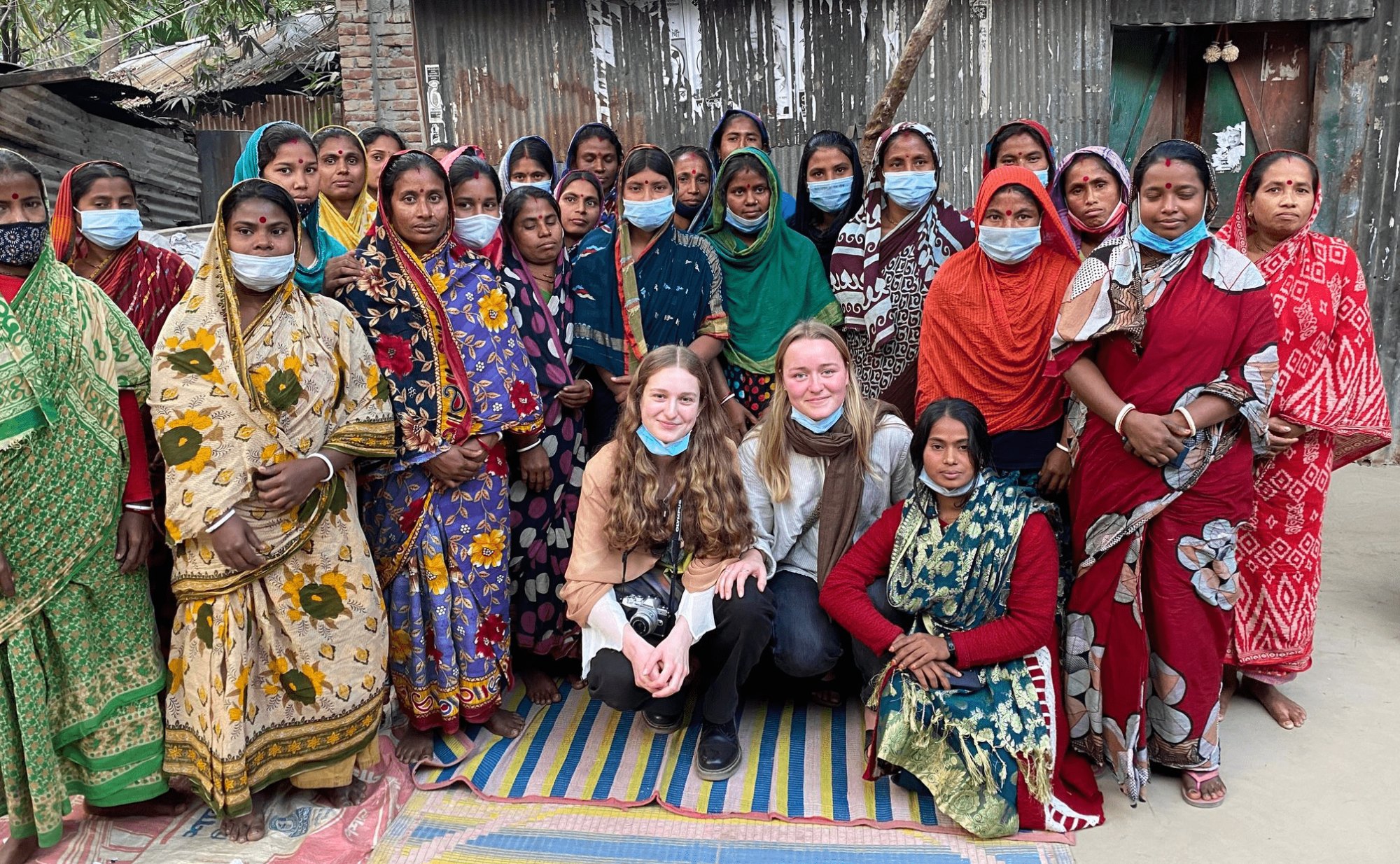
After four years I am back, with our volunteers from Denmark, to visit them and to have a cup of tea. Now, with CISU’s funding and our members’ and volunteers’ support, we will be working with the women in this community and thirty other groups in nearby areas: 750 marginalised women in all. Together with our local partner organisation Udayan, we hope to support them with training in income-generating activities, awareness of their rights, self-savings programmes, networks with local government and integration with neighbouring communities, and much more.
They gave us a warm welcome this time. They were wearing colourful dresses and were in a festive mood. “This is the first time ever a foreigner came to visit us,” they said. There were hugs and laughter. We were touched by their hospitality. Katrine and Natalia had happy tears on the way back; I couldn’t hide mine either. We didn’t talk much on the way, but we all knew our work had just begun.